Land on West Side of Hay Street
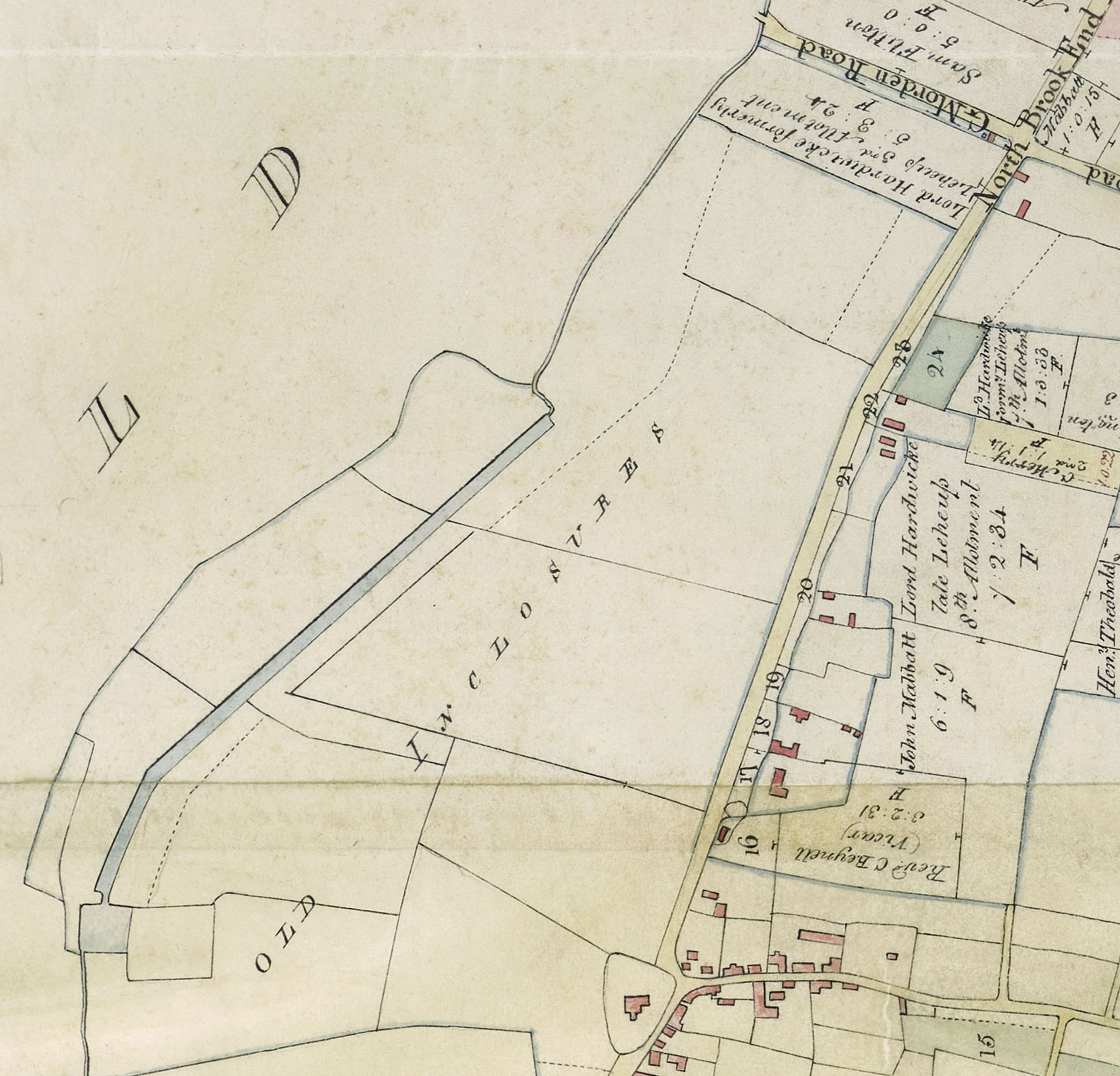
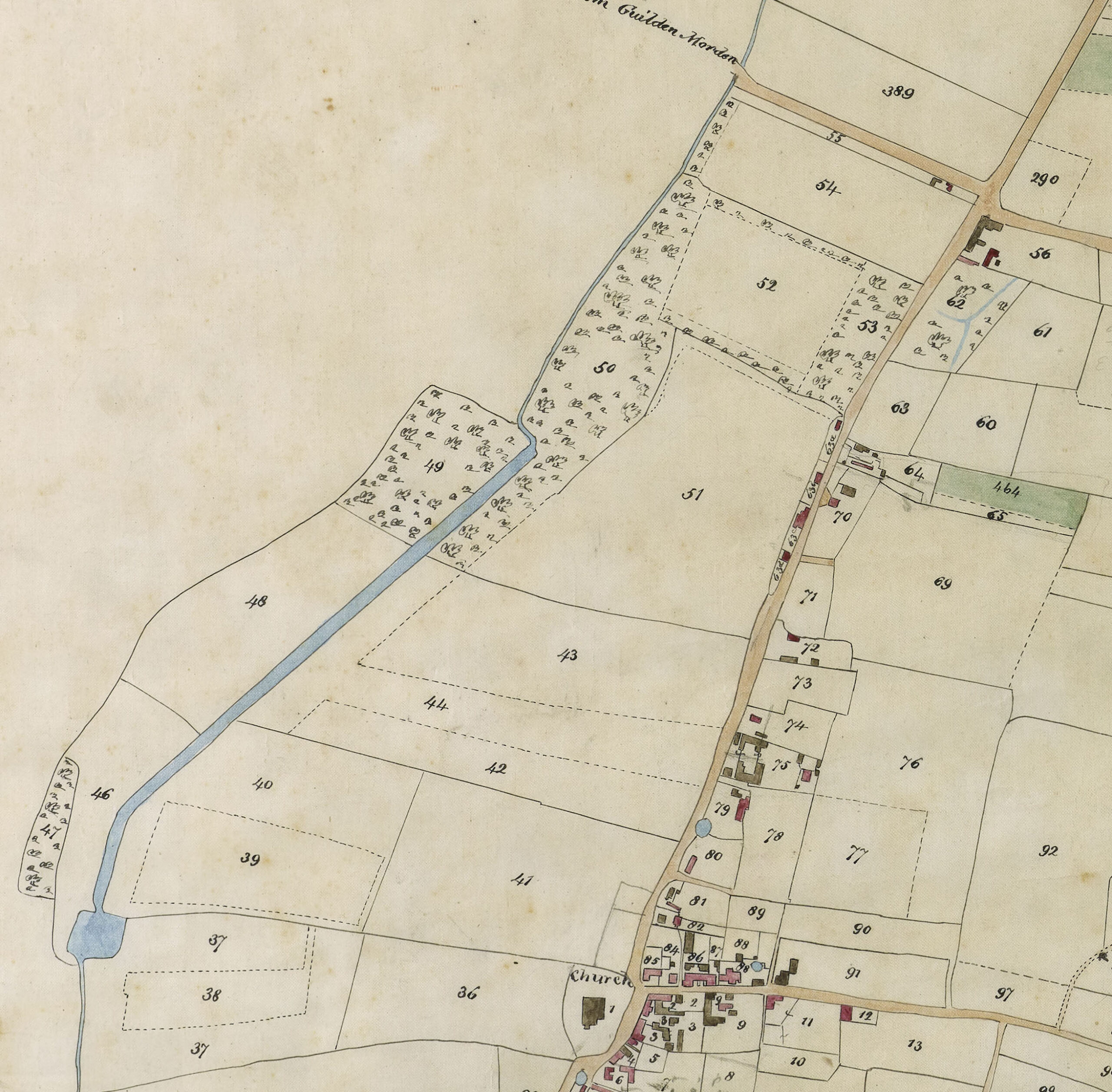
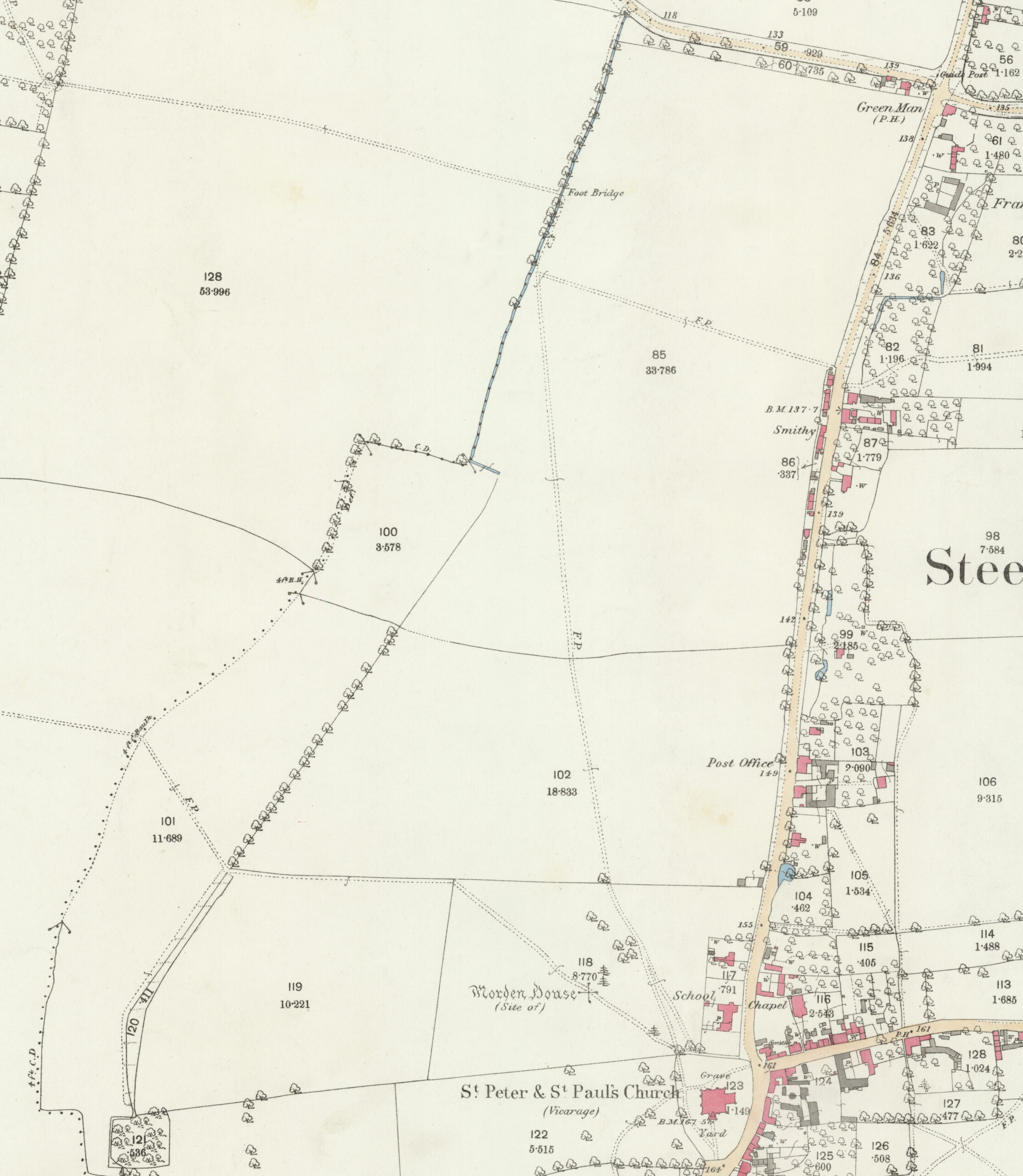
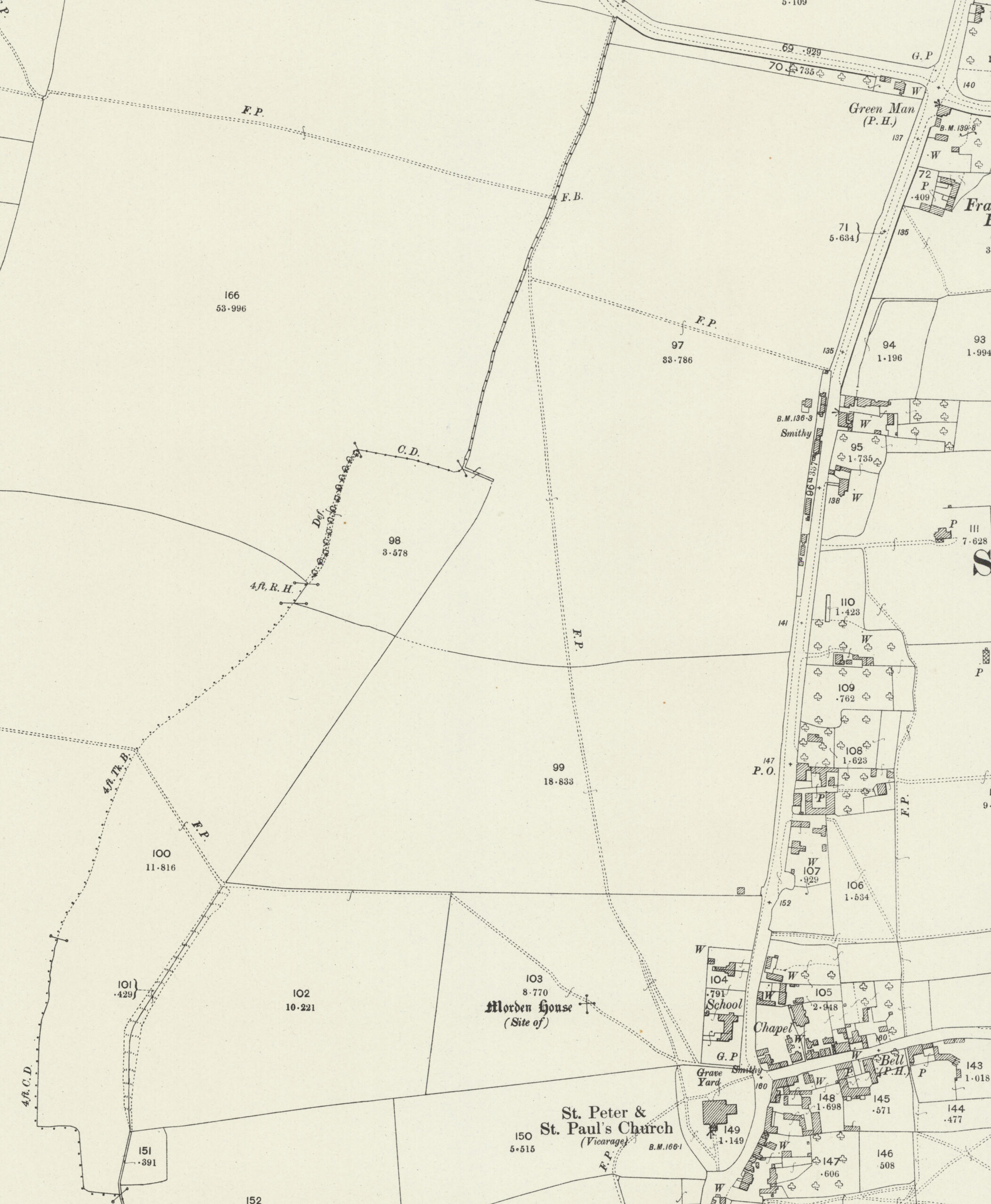
Anciently the land to the west of Hay Street comprised old enclosures of arable and pasture farmland and woodland, sloping gradually down to West Brook, which forms the parish boundary with Guilden Morden. Virtually all this land belonged to Steeple Morden Manor; some let to tenant farmers and the remainder in hand. An exception was a block in the middle, which was part of Cheyney Manor. By chance, this Cheyney land became much later the Recreation Ground and Conservation Area.
Missing were any dwellings. The notable exception was the large manor house (demolished in 1765), which was just to the north west of the Church. It appears to have stood in solitary splendour. The other exception was the full length of Hay Street away and alongside Trap Road was a narrow plot in separate ownership on which stood a small house with garden. It remains today as Ashcroft House. Otherwise there were no dwellings along the west side of Hay Street.
The first hint of development appears to have been prompted by the Parliamentary Enclosure of the parish, which was a drawn out process from 1806 to 1817. It had little impact on the land to the west of Hay Street as it was already enclosed. On the east side, though, small parcels of land were taken from the highway and transferred to the adjoining plots. This may have prompted the Merry or Charter family to make a grab in 1818-19 for a strip of manorial waste on the west side, upon which they erected four cottages; three of which still stand.
The next chink of development appeared in 1866 when an area just north of the Church was sold for the erection of the School. Shortly after the Manor built a pair of cottages adjacent to the new school, for letting to local people.
Around the same time, various pieces of manorial land were brought together as a single holding, including a farm yard on the other side of Hay Street, to form a small farm to be let to John Franklin of Brook End. This only lasted until the 1892 dispersal sale of the Steeple Morden estate, when the farm, which had become known as Franklin’s Farm, was bought as one lot by E O Fordham on behalf of the Steeple Morden Benefit Society, which split it into small-holdings and allotments let to various local men.
This was to shape the future development along Hay Street, towards the north. In time, the Society built two pairs of semi-detached cottages, with decent gardens for letting and sold off a plot or two for village people to self-build. The Benefit Society sold the cottages and land in 1948 and in the main they were bought by the tenants, providing opportunity to extend gardens and create small-holding plots. These gardens and plots subsequently offered plenty of opportunity for “infill” development, beloved by the planners in the 1960s and 70s and beyond. The vast majority of dwellings lining the west side of Hay Street date to the 20th and 21st Centuries.
Histories of individual properties will appear on their own pages.
Click on any image below to view. Click again to enlarge. Drag to view complete image.
Various Maps 1807 to 1903
Last Updated on October 13, 2025